1714–1837 · Chapter 01 of 06
Georgian
Handmade, and made for candlelight.
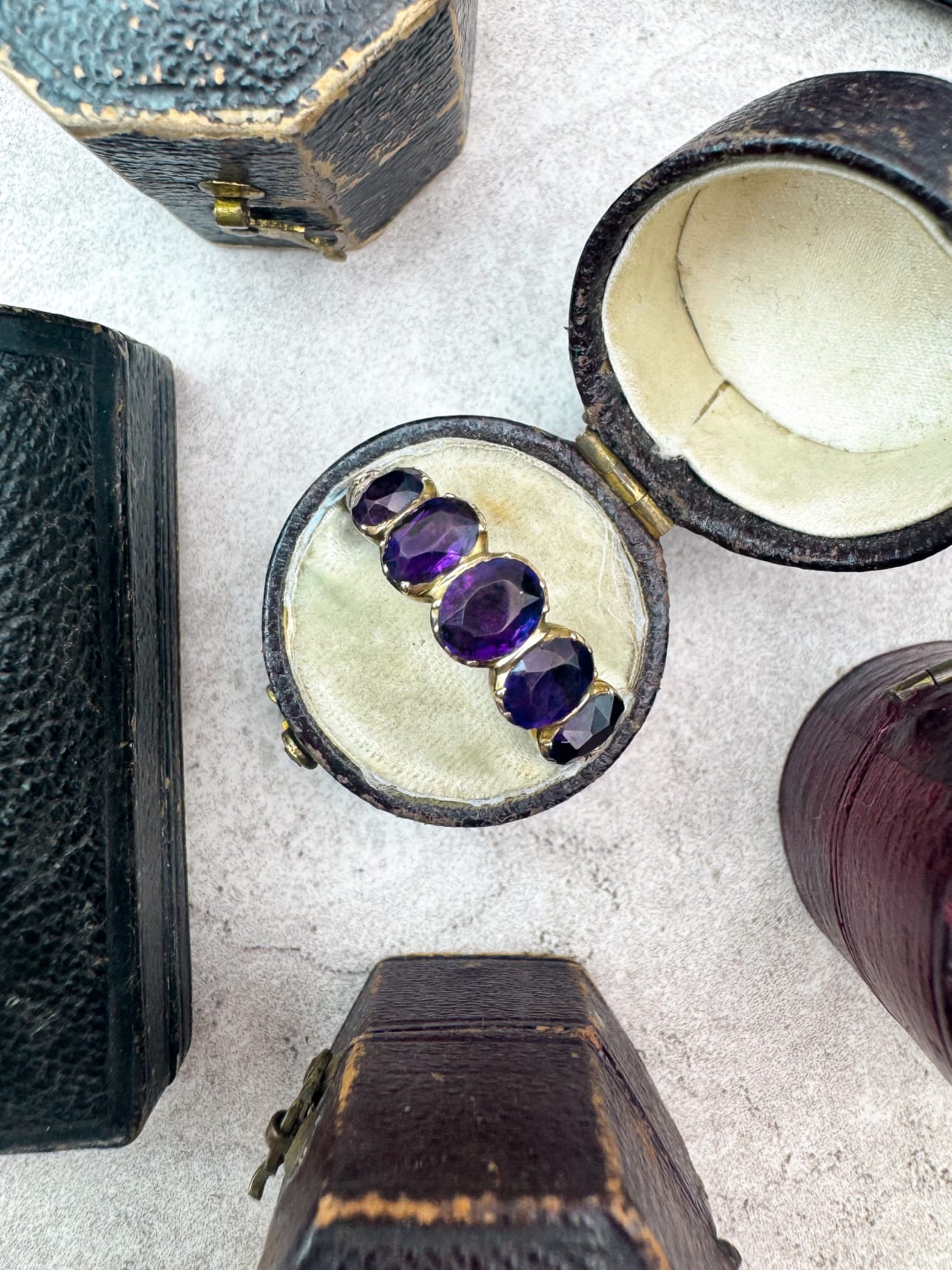
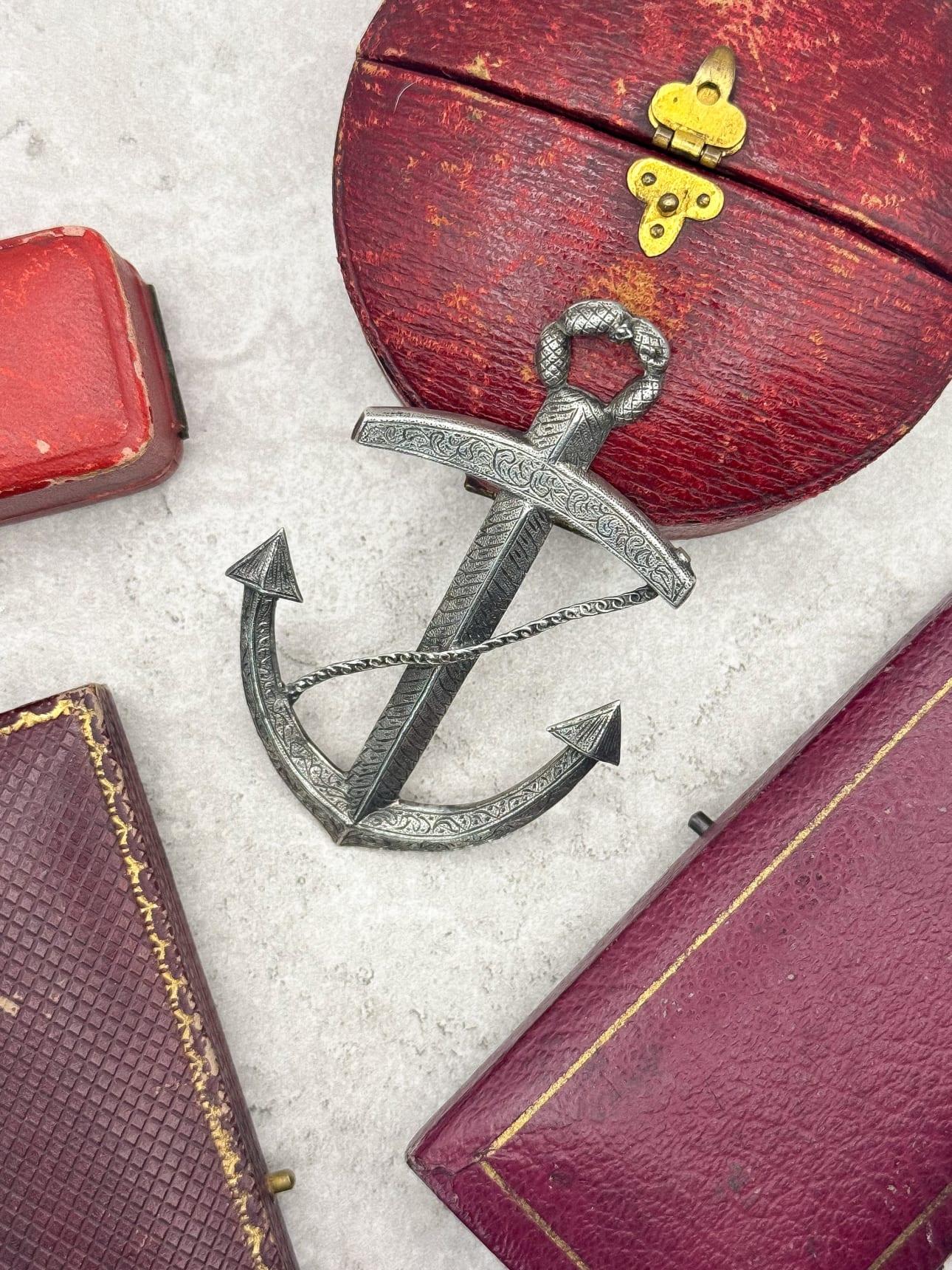
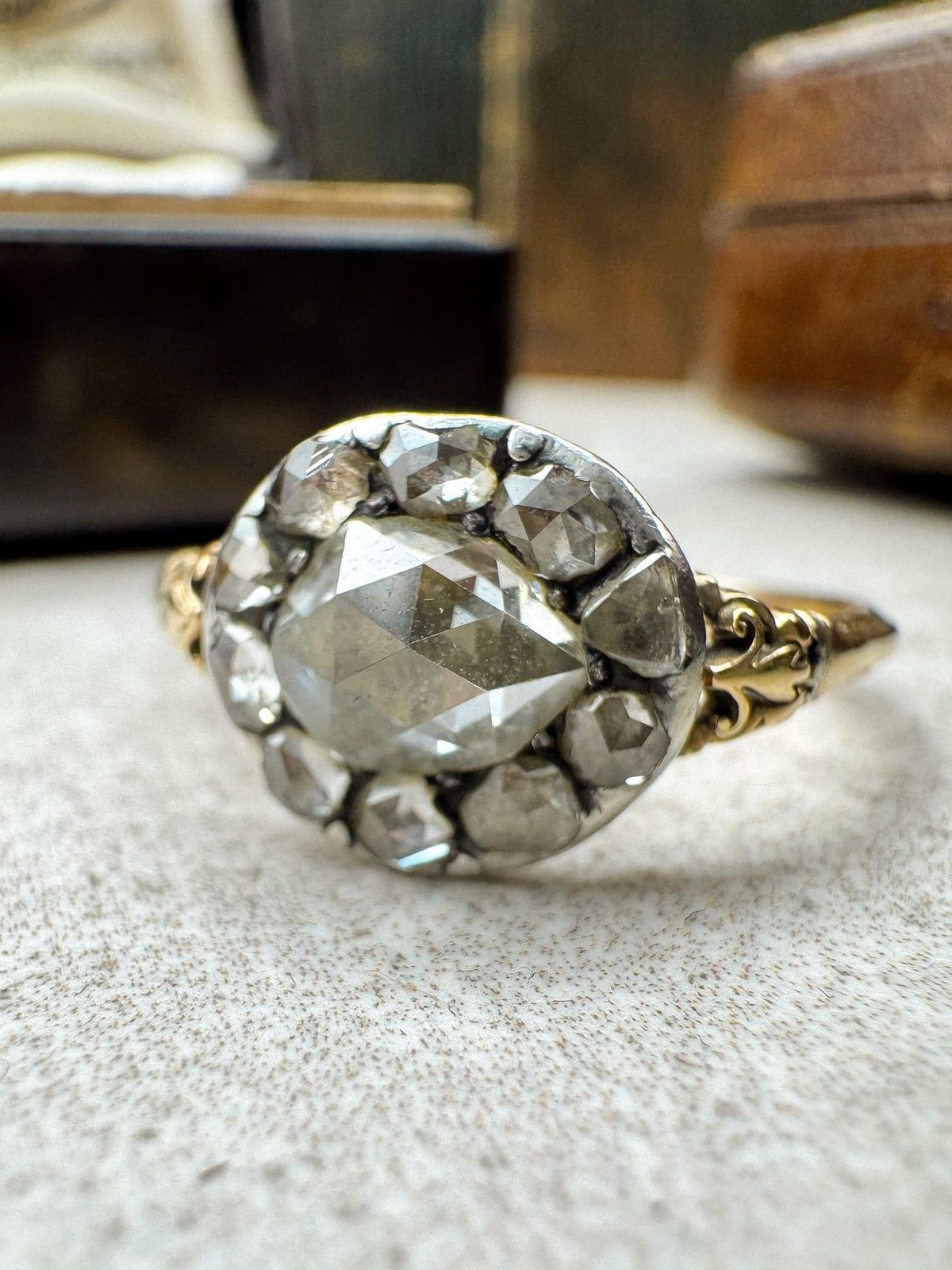
Foil-backed stones, rose-cut diamonds and closed-back settings are what you notice first. Almost all Georgian jewellery was made before the Industrial Revolution reached the jewellery trade and long before the light bulb, so pieces were finished by hand, often by candlelight. Sentimental jewellery was around too, long before the Victorians made it popular.
- Closed-back settings
- Foil-backed stones
- Rose-cut diamonds
Where Georgian sits: the first era on the timeline, before Victorian.
Defining features
- Made entirely by hand, with no machine work
- Closed-back settings, often foiled
- Asymmetrical, hand-cut stones
- Repoussé, where gold is hammered and embossed from behind
- Paste and rock crystal, backed with foil
- Hairwork, memorial and devotional pieces
How to spot it
Turn it over. A closed back, with metal running solid behind the stone, is the clearest sign, and there is often foil sealed in behind it. Finishing was done by hand, so edges and joins are a little uneven. Hallmarks won’t help much, as British law didn’t require them on most jewellery and Georgian pieces rarely have one. Gold is usually around 15ct or 18ct. 15ct wasn’t a legal standard until 1854, so it is easy to miss on a piece this old. The Victorians also loved copying Georgian designs, which can make the two hard to tell apart.
Materials
Metals
- Silver settings
- Gold, mainly 15ct or 18ct
Stones & materials
- Foil-backed paste
- Emerald
- Ruby
- Diamond
- Rock crystal
- Hairwork
- Ivory
- Coral
- Enamel
- Pearls