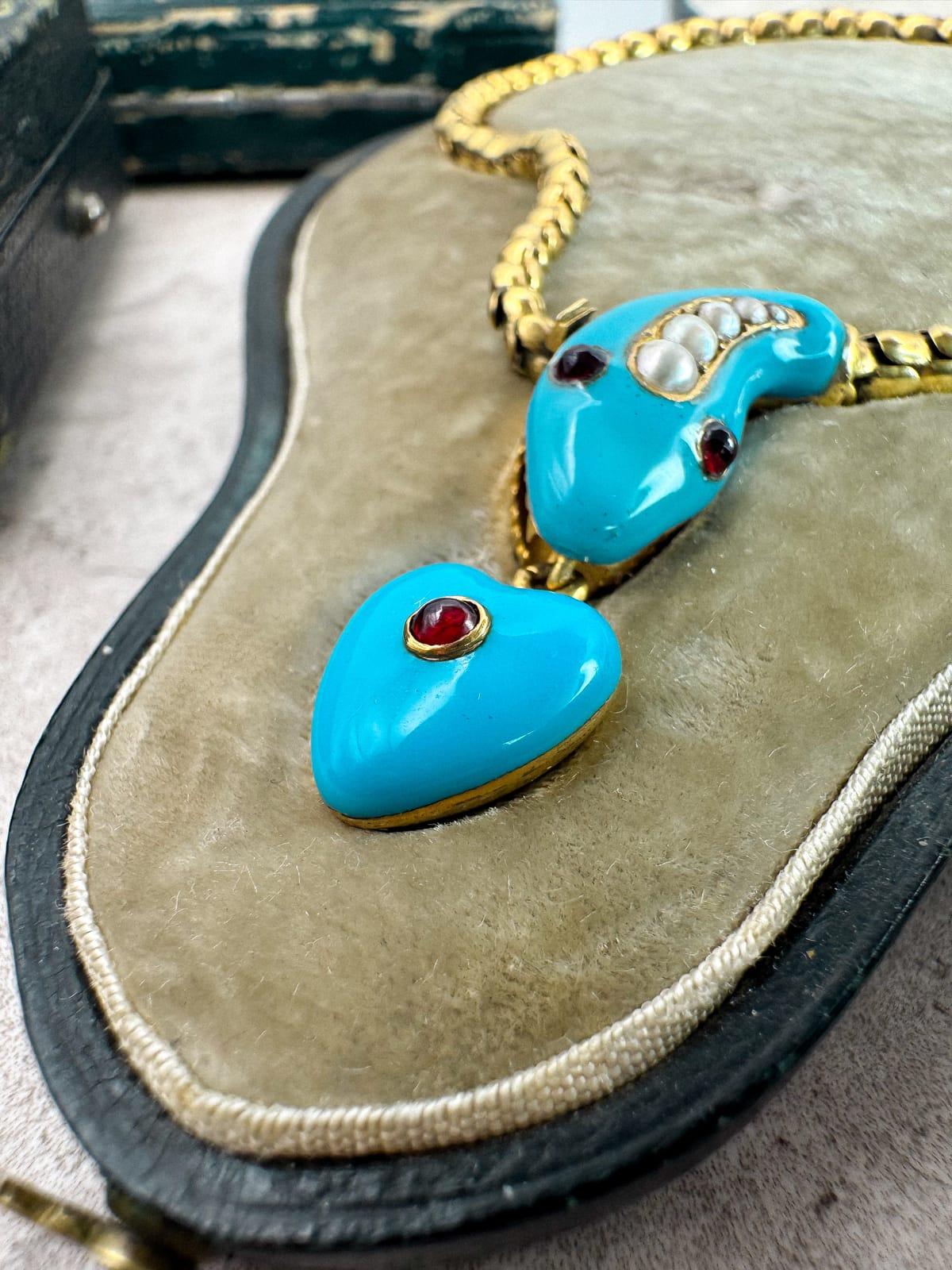
1837–1901 · Chapter 02 of 06
Victorian
Sentiment and symbolism across three stages.
Queen Victoria reigned for over sixty years, and the jewellery falls into three stages. Romantic early pieces gave way to heavier, darker designs after Prince Albert died in 1861, and things lightened again towards the end of the century. Symbolism runs through all of it, and most motifs meant something to the person wearing them.
- Symbolic motifs
- Mourning jewellery
- 15ct gold
Where Victorian sits: after Georgian, before Edwardian.
Defining features
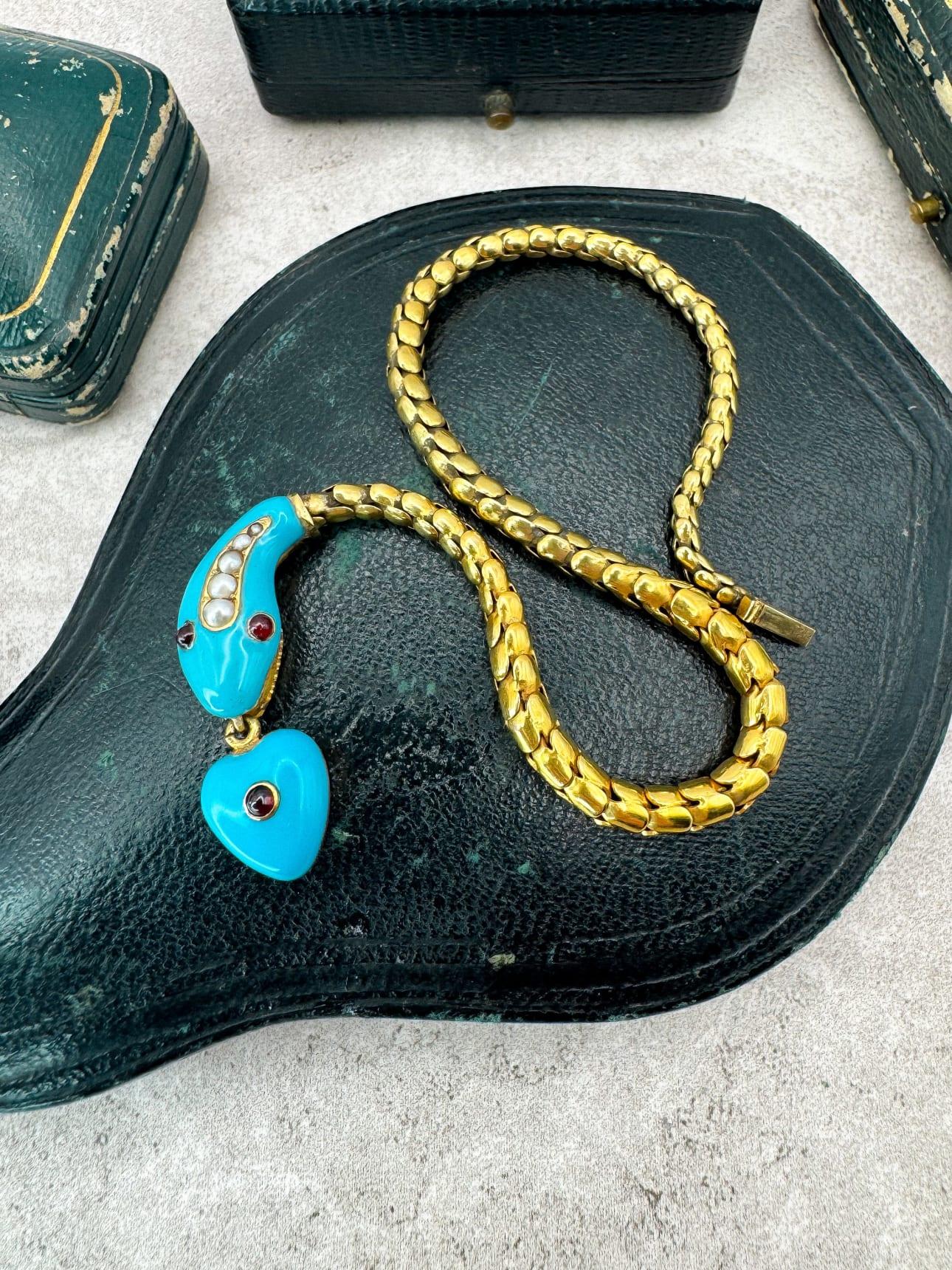
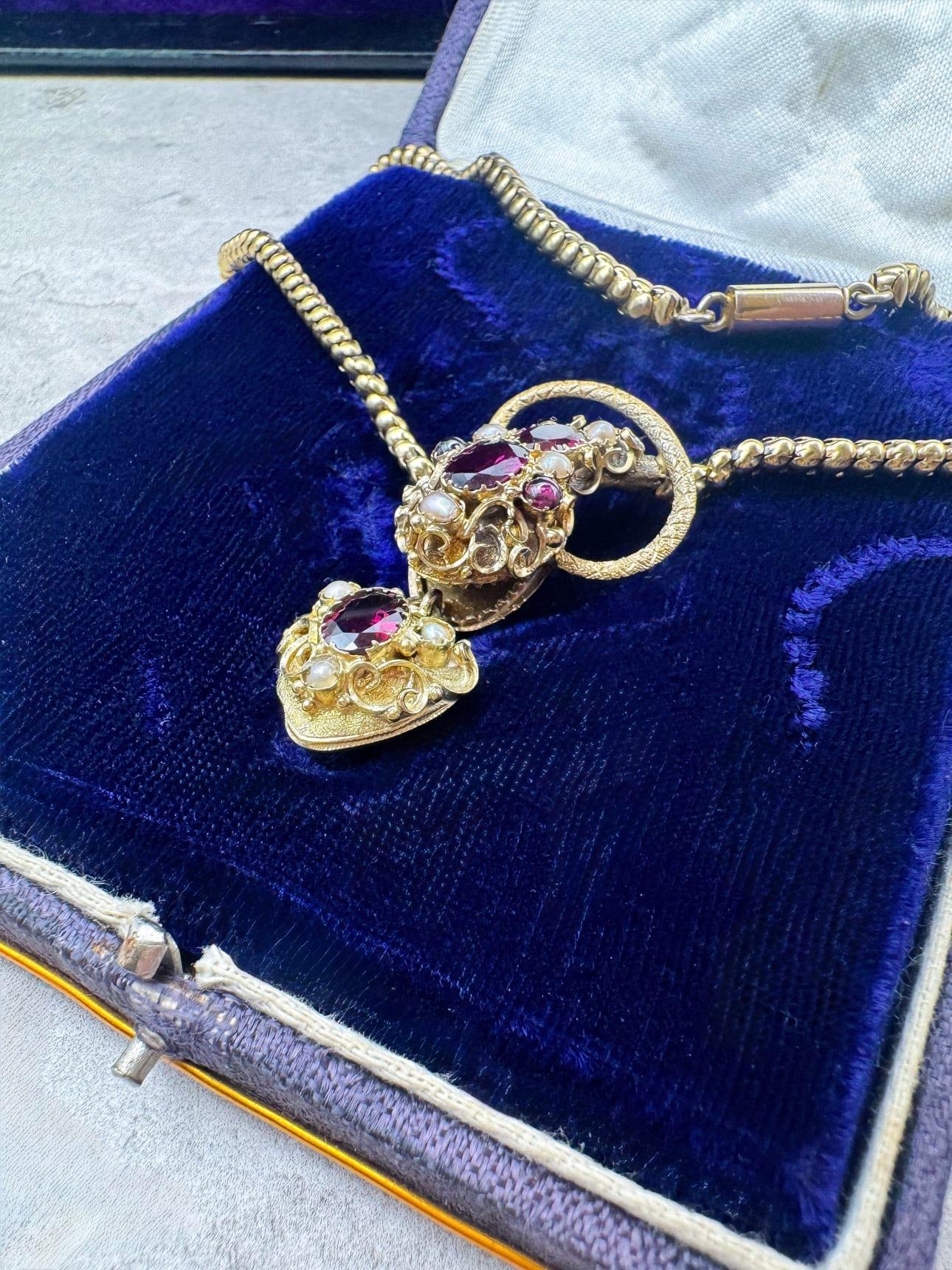
- Symbolic motifs: Mizpah, snakes, hearts, daisies and swallows
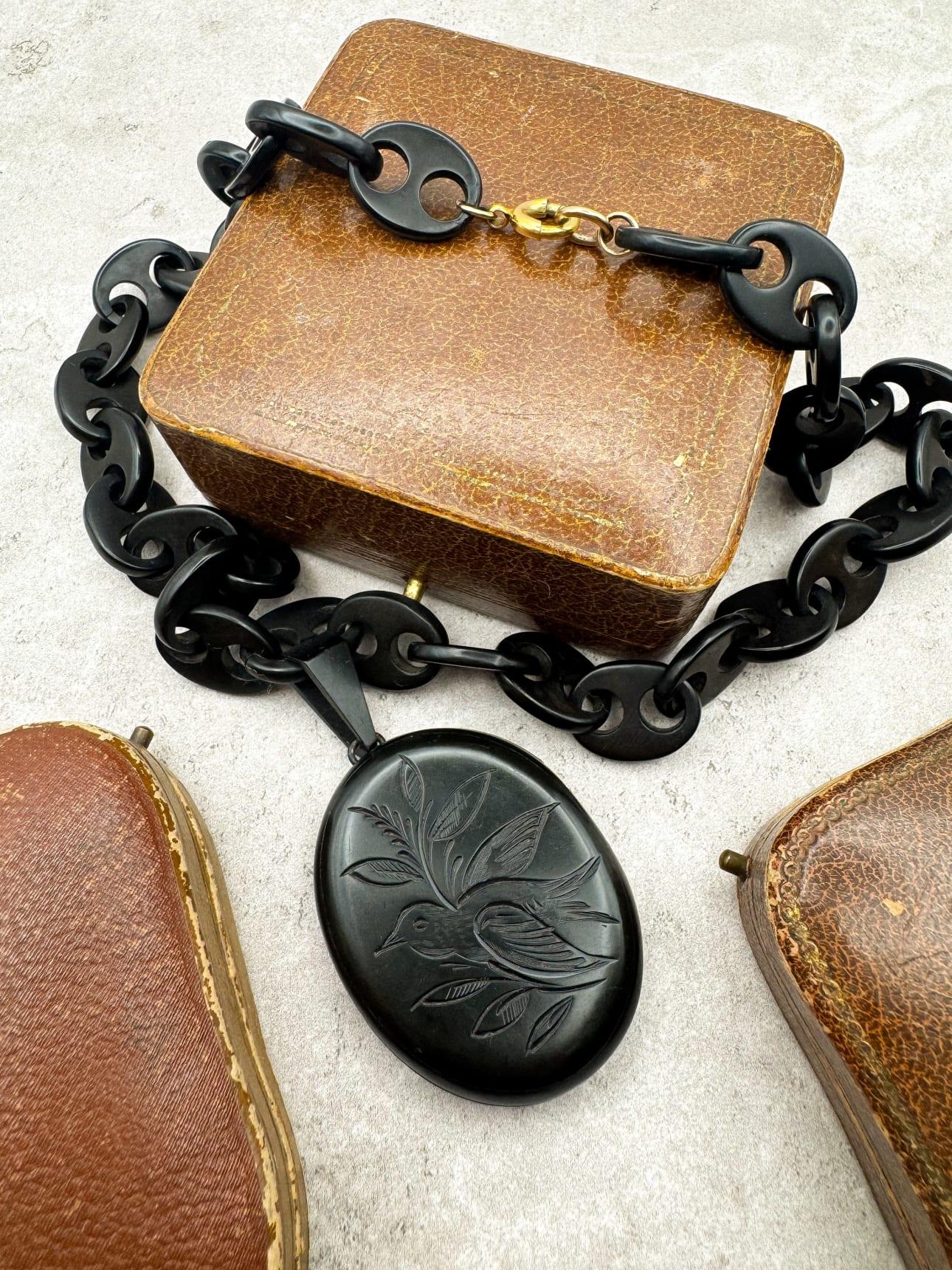
- Mourning jewellery in Whitby jet, black enamel and hairwork
- Designs inspired by India and Japan
- Archaeological revival in Etruscan, Egyptian and Renaissance styles, with Carlo Giuliano working in London
- The real Egyptian craze came later, with the discovery of Tutankhamun
How to spot it
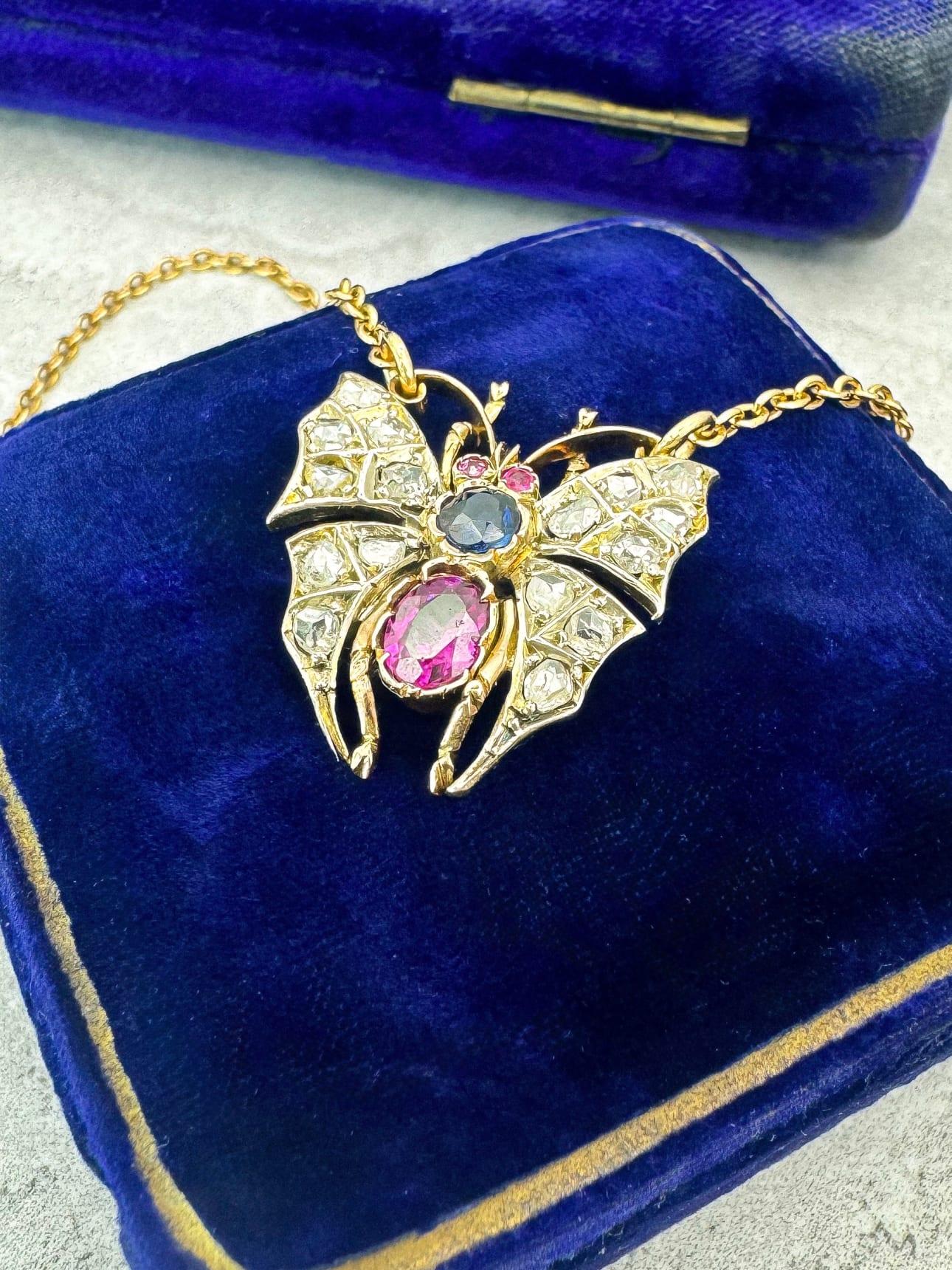
A 15ct gold hallmark is the best clue you can get, because Britain only used that standard from 1854 to 1931. It is marked 15 and .625, usually with a date letter that gives the exact year. Old mine cut diamonds are cushion-shaped, with a high crown and a small flat table, and look nothing like a modern brilliant. Seed pearls in tight floral clusters and the warm colour of older gold are good signs too.
Materials
Metals
- Yellow gold (9ct, 15ct, 18ct, 22ct)
Stones & materials
- Old mine cut diamonds
- Garnet
- Amethyst
- Seed pearls
- Coral
- Turquoise
- Whitby jet
- French jet
- Bog oak
- Enamel
- Hairwork