1920–1935 · Chapter 04 of 06
Art Deco
Straight lines between the wars.
After the First World War, British jewellery went straight-edged and symmetrical. Emerald-cut stones became far more standard, calibré stones were cut to fit their settings exactly, and diamonds were laid close together in pavé. When Howard Carter opened Tutankhamun’s tomb in 1922, Egyptian motifs came back in a big way.
- Geometric lines
- Emerald & calibré cuts
- Pavé diamonds
Where Art Deco sits: after Edwardian, before Wartime.
Defining features
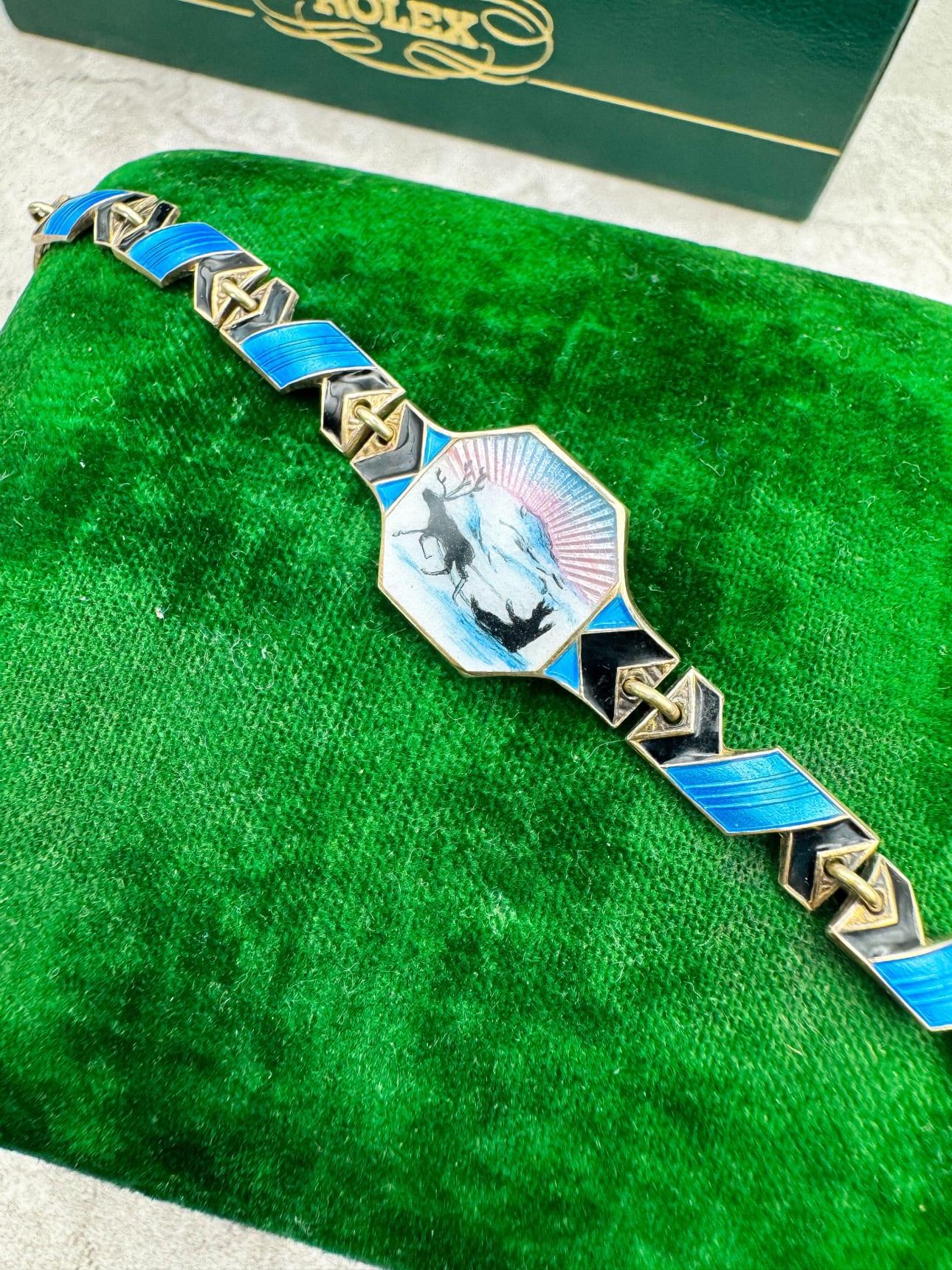
- Strong geometric and symmetrical forms
- Contrasting colours, such as black onyx with white diamonds
- Calibré-cut stones set flush in precise channels
- Egyptian revival motifs after Tutankhamun, along with Eastern influences
- Millegrain edging and fine filigree
How to spot it
Platinum or white gold, step-cut (emerald-cut) and baguette stones, and geometric outlines. Platinum is cool white and feels heavy for its size. It won’t carry a British hallmark at this date, as platinum wasn’t hallmarked here until 1975, so expect a stamp like PLAT at most. Everything is precise, with sharp edges, stones sitting flush and colour used sparingly. Less expensive British pieces in silver, paste and marcasite have the same look.
Materials
Metals
- Platinum
- White gold
- Silver
Stones & materials
- Old cut diamonds
- Emerald
- Sapphire
- Ruby
- Black onyx
- Jade
- Rock crystal
- Marcasite
- Paste