
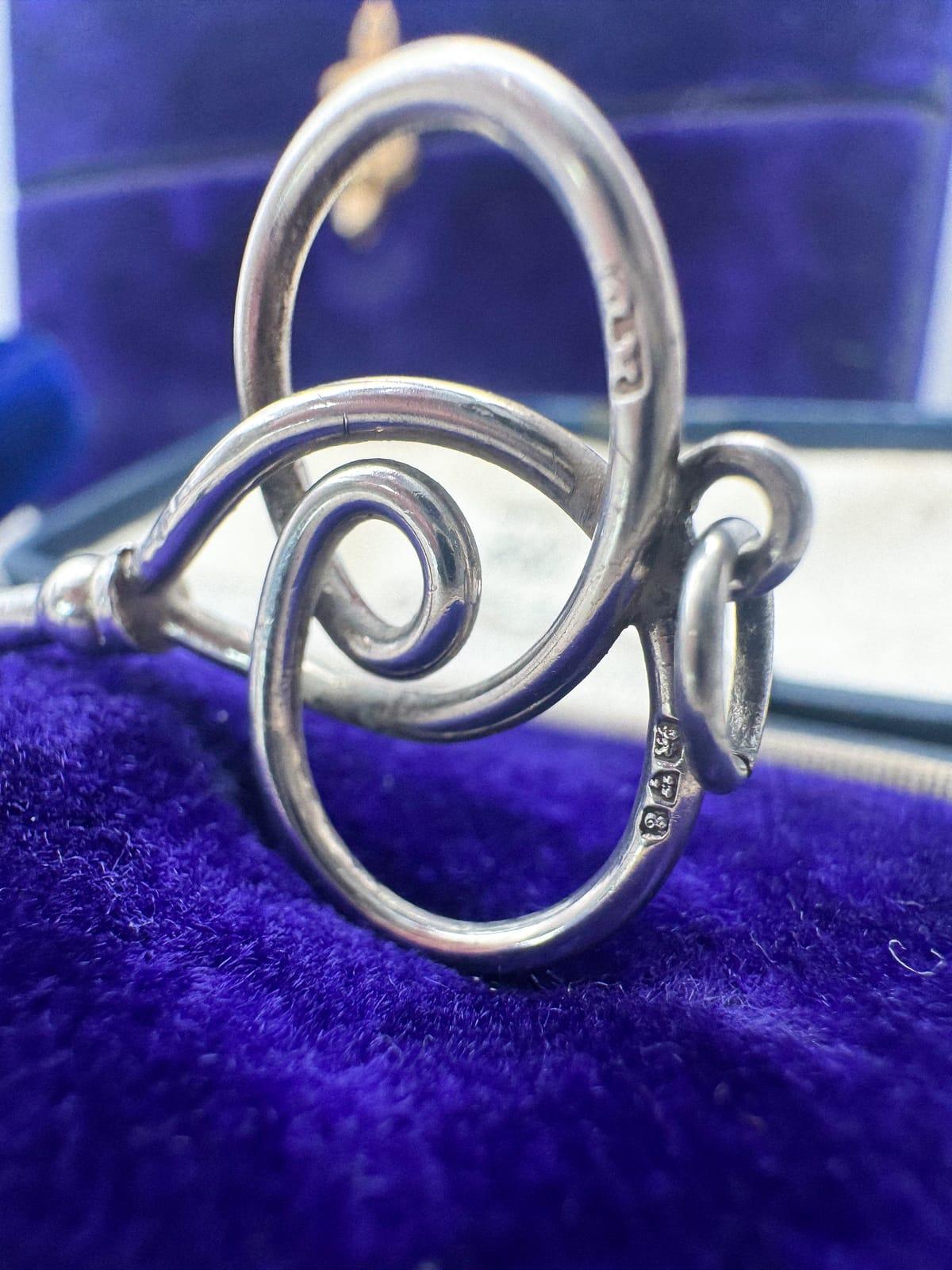
1890–1910 · Design movement
Art Nouveau
Nature, drawn in long flowing lines.
Art Nouveau began on the Continent with Lalique and the Paris jewellers, but British makers took it their own way. Liberty’s Cymric range, first shown in 1899 and mostly made by W.H. Haseler in Birmingham, drew on designs by Archibald Knox. Murrle Bennett in London and Charles Horner in Halifax also sold it widely, largely in silver and enamel.
- Flowing lines
- Enamel on silver
- Opal & moonstone
Where Art Nouveau sits: a design movement across the late Victorian and Edwardian years.
Defining features
- Naturalism: flowers, leaves and vines
- Long, flowing and often asymmetric lines
- Enamel on silver, usually blues and greens
- Opals, moonstones and blister pearls
How to spot it
Flowing lines rather than geometry, and enamel shading from blue to green on silver. British pieces are often hallmarked, and the town mark helps: Liberty’s work went through Birmingham and most of Charles Horner’s through Chester. French plique-à-jour, where the enamel has no backing and lets the light through, is rare in Britain.
Materials
Metals
- Silver
- Gold
Stones & materials
- Enamel
- Opal
- Moonstone
- Blister pearls
- Turquoise
- Glass
Art Nouveau pieces in the shop
Nothing from this era is in the shop right now. Browse the collection