
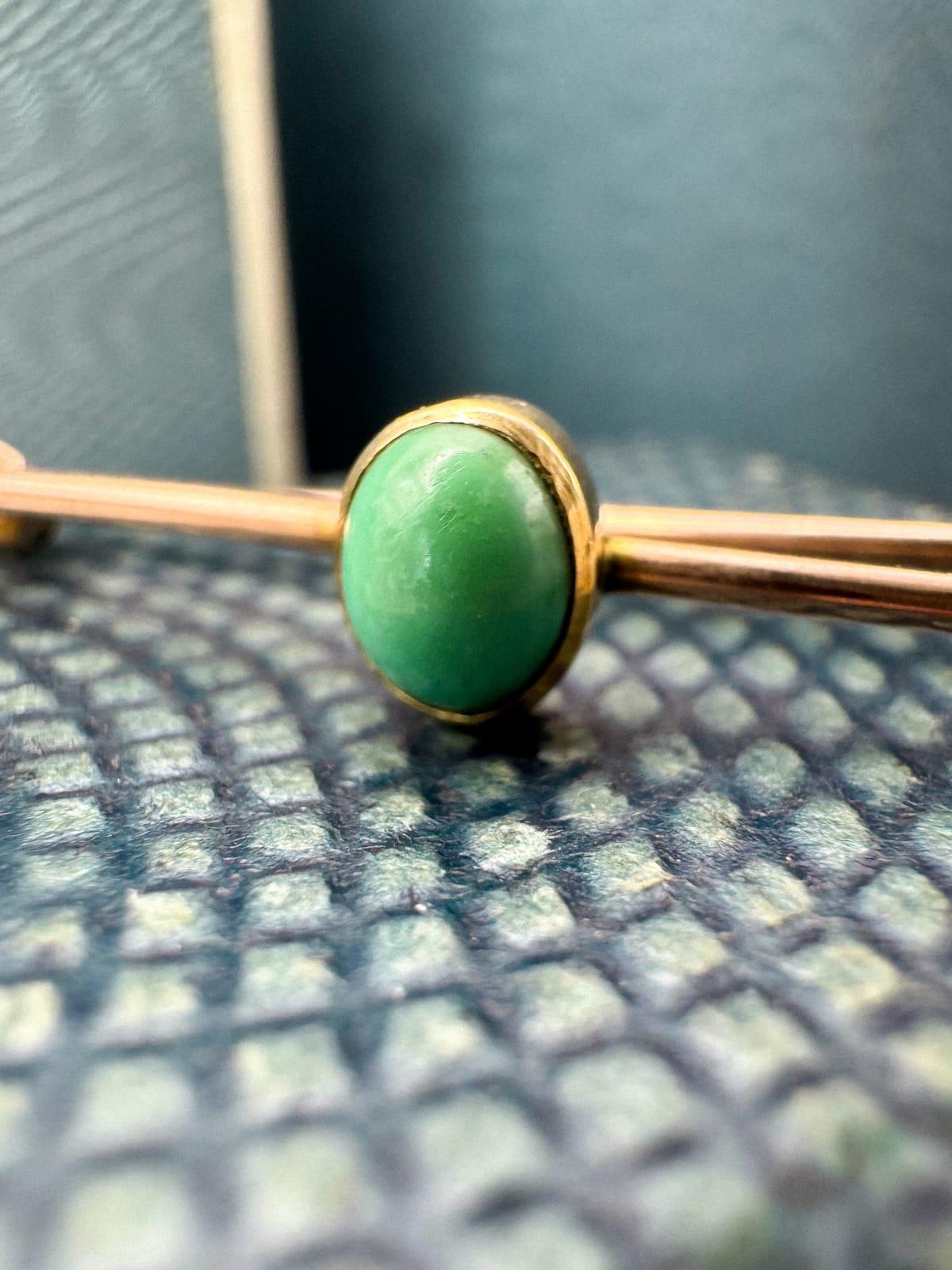
1880–1920 · Design movement
Arts & Crafts
Made by hand, on purpose.
Arts & Crafts began in Britain as a reaction against factory-made goods, and the makers wanted you to see the work that had gone into a piece. C.R. Ashbee’s Guild of Handicraft, Arthur and Georgie Gaskin in Birmingham and Phoebe Traquair in Edinburgh are the names to know. Enamelling had a big revival in these years, and a lot of the best of it was done by women.
- Hammered silver
- Cabochon stones
- Enamel
Where Arts & Crafts sits: a design movement across the late Victorian and Edwardian years.
Defining features
- Hand-hammered silver and gold with a soft, matte surface
- Flowers, leaves and Celtic knots
- Enamel, often in blues and greens
- Cabochon stones in simple settings
- Turquoise, mother-of-pearl and blister pearls
How to spot it
Hammer marks and a soft surface rather than a high polish. Stones are usually cabochons, domed and polished without facets, in plain settings. Small workshops often didn’t hallmark their work, so a maker’s mark may be all there is. On the more commercial pieces, look for Liberty & Co., Murrle Bennett or the Birmingham Guild of Handicraft.
Materials
Metals
- Silver
- Gold
Stones & materials
- Turquoise
- Mother-of-pearl
- Blister pearls
- Moonstone
- Enamel
Arts & Crafts pieces in the shop
Nothing from this era is in the shop right now. Browse the collection