Old Cut Diamonds: A Guide to Antique Diamond Cuts
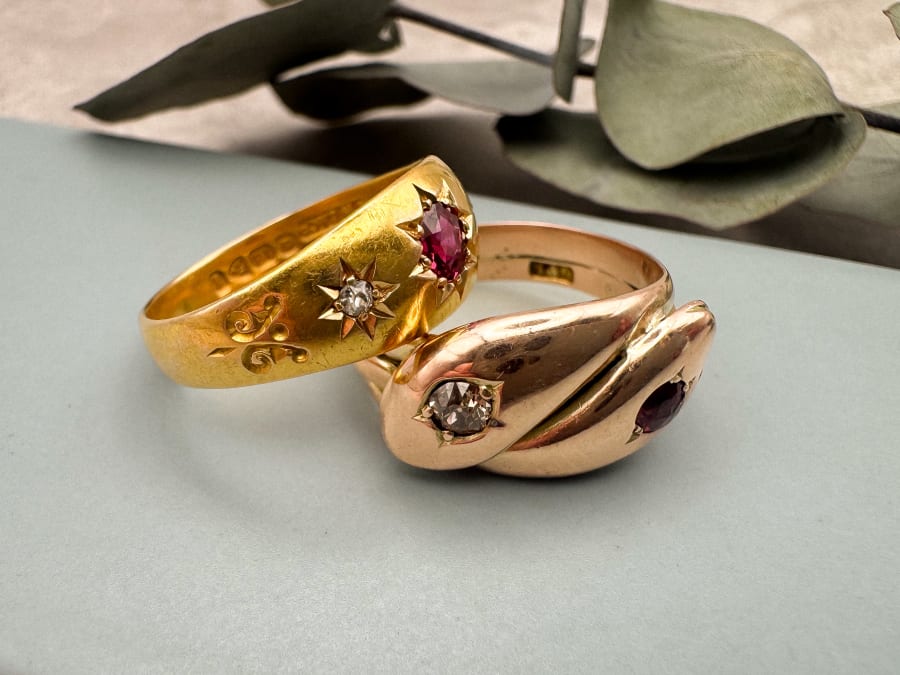
Unlike modern diamonds, which are cut by lasers and computers for precision and flash, antique diamonds were cut entirely by hand by master craftspeople. Shaped by candlelight long before electric lights existed, old-cut diamonds possess a soft, romantic glow, unique character, and an undeniable historical charm that modern brilliant cuts simply cannot replicate.
For collectors of vintage and antique jewellery, understanding how historic diamond cuts differ helps unlock the beauty and history behind every stone.
What Makes an Antique Diamond Cut Unique?
Modern diamonds are engineered to maximise light reflection, often referred to as 'brilliance' or 'fire', resulting in a very crisp, uniform sparkle. By contrast, historic cutters focused on preserving as much of the original rough diamond crystal as possible while maximizing its sparkle under soft candlelight.
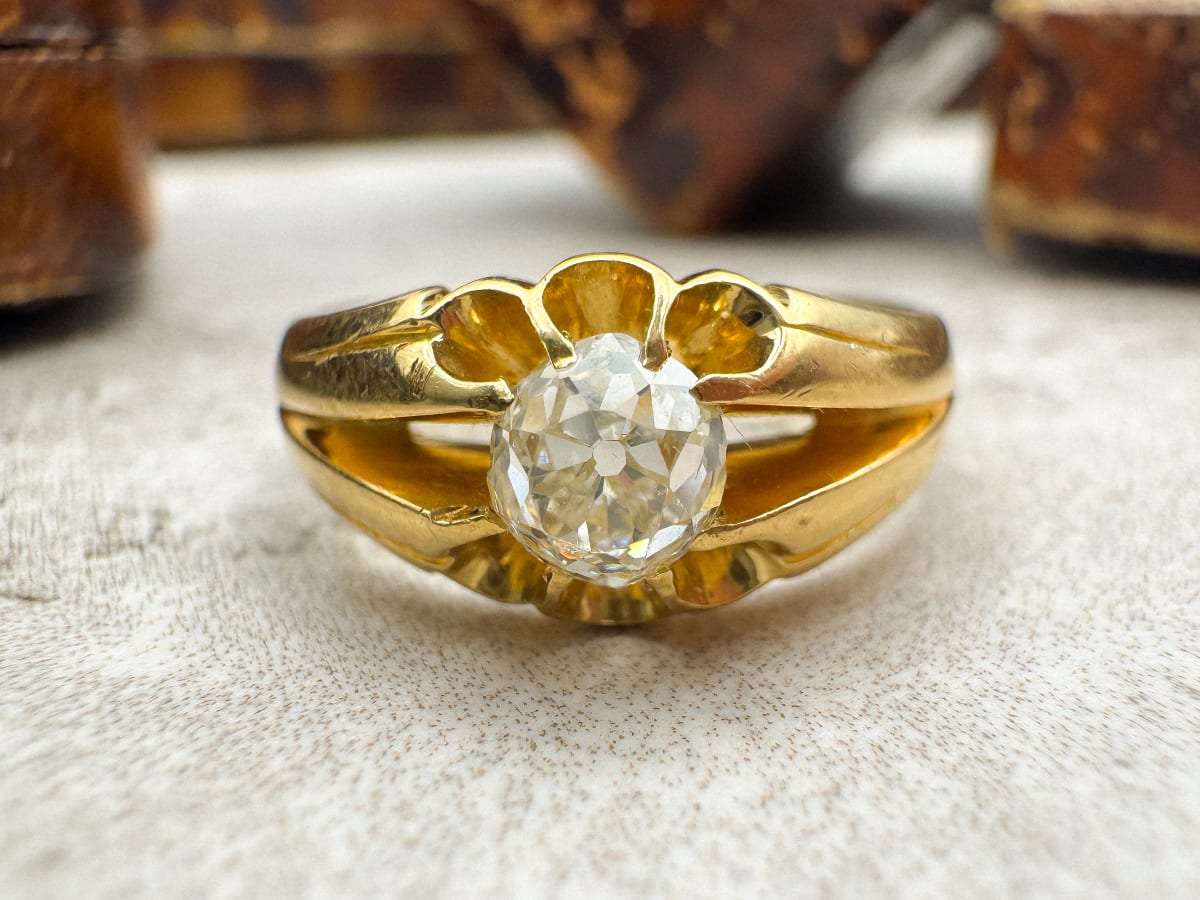
- Chunky Facets: Antique cuts feature larger, fewer facets, creating soft flashes of warm light rather than the small, splintery reflections of modern cuts.
- High Crowns & Small Tables: Historic stones have higher profiles (crowns) and smaller top flat surfaces (tables), giving them a distinct three-dimensional depth.
- Open Culets: Older diamonds feature an open or flattened facet at the very bottom tip (the culet), creating a characteristic tiny 'circle' visible when looking down through the top of the gem.
Key Types of Antique Diamond Cuts
- Rose Cut (1500s–1800s): Named for its resemblance to an opening rosebud, a rose cut features a flat base with a faceted dome on top. Lacking a pavilion or underside, rose cuts sit low to the skin and emit a subtle, ethereal shimmer reminiscent of pool reflections.
- Old Mine Cut (1700s–Late 1800s): Considered the ancestor of the modern cushion cut, old mine cut diamonds feature a roughly squarish or cushion-shaped outline with rounded corners. They boast a very high crown, a deep pavilion, a small table, and a prominent open culet, giving them incredible warmth and presence.
- Old European Cut (Late 1800s–1930s): As diamond-cutting technology progressed, the square outline of the old mine cut evolved into the fully round old European cut. Featuring 58 hand-carved facets, high crowns, and small tables, old European cuts bridge the gap between historic handcraft and modern round brilliant geometry.
- Modern Round Brilliant (1950s–Present): Developed to maximise light performance under bright electric lighting, modern brilliant cuts feature precise, mathematical symmetry, thin girdles, pointed culets, and sharp, icy brightness.
Why Collectors Prize Candlelit Character
While modern diamonds prioritise uniformity and white light brilliance, antique diamonds offer individuality and mood. Because every old-cut diamond was shaped by eye, no two stones are ever completely identical.
Their larger facets draw in ambient light, producing soft, warm bursts of spectral colour rather than stark reflections. When viewed under natural sunlight or warm evening light, old cut diamonds radiate a moody, romantic character that tells the story of an era gone by.
At The Jaybird Collection, we love the character of hand-cut antique diamonds.
Keep reading