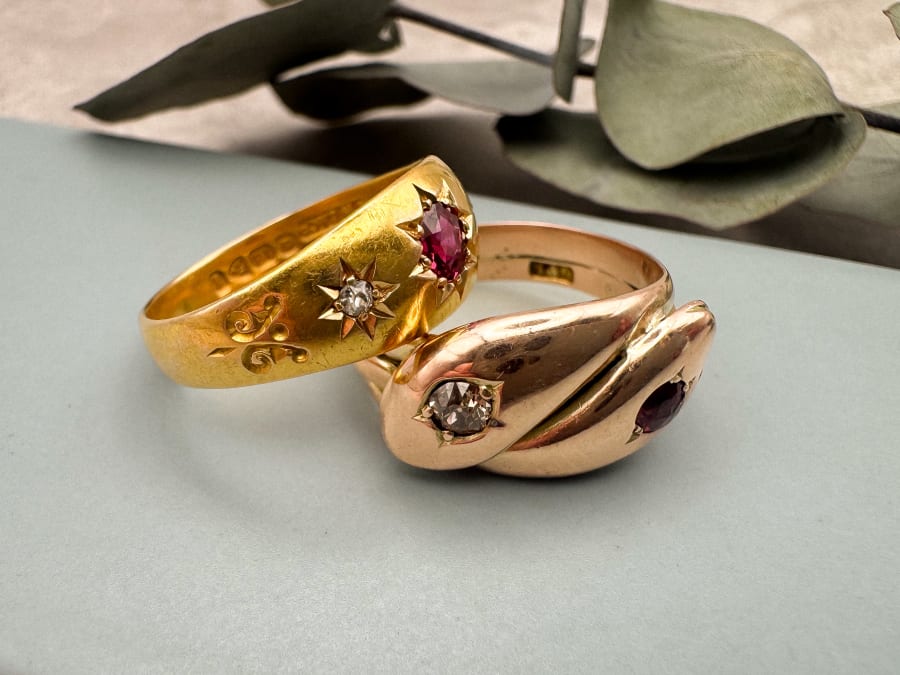
What Is a Hallmark? A Guide to British Assay Marks
When examining a piece of vintage or antique jewellery, one of the first things collectors look for is a set of tiny stamped symbols pressed into the metal. Known as hallmarks, these stamps are some of the oldest forms of consumer protection in history, offering a fascinating peek into an item’s past.
For lovers of historical jewellery, understanding how to read these marks, and why they might sometimes be missing, is essential for collecting with confidence.
Understanding the British Hallmark
In the UK, it is illegal to supply or offer to supply items described as gold, silver, platinum, or palladium unless they carry an official hallmark. Traditional British hallmarks act as an independent guarantee of precious metal purity.
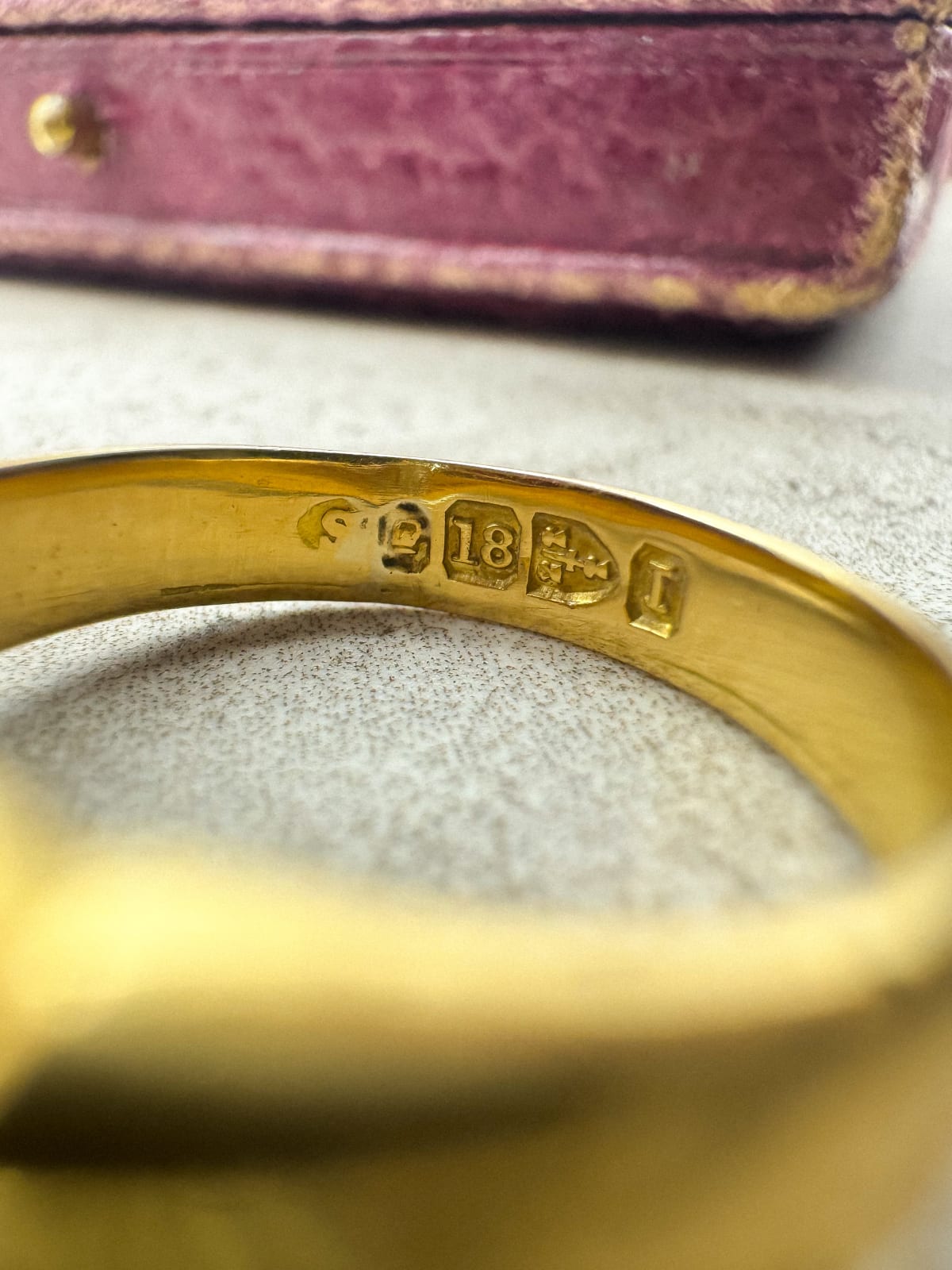
A standard traditional British hallmark typically tells you four key stories:
- Sponsor’s Mark: The unique initialed stamp representing the individual maker, goldsmith, or firm responsible for submitting the item.
- Fineness Mark: A numerical mark indicating the purity of the precious metal in parts per thousand (such as 925 for sterling silver or 750 for 18ct gold) set within a specific shape for that metal.
- Assay Office Mark: A symbol showing which city tested and stamped the piece, such as the Leopard’s Head for London, the Anchor for Birmingham, the Rose for Sheffield, or the Castle for Edinburgh.
- Date Letter: A variable alphabet letter inside a specific shield shape that pinpoints the exact year the item was hallmarked.
Why Some Antique & Vintage Pieces Aren't Hallmarked
It is a common misconception that an unhallmarked ring or pendant must be fake or base metal. In the world of antique and vintage jewellery, unhallmarked pieces are actually incredibly common for a variety of historical and practical reasons.
- Legal Exemptions by Weight: Under UK statutory regulations, items falling under specific weight thresholds are exempt from compulsory hallmarking. Small, light items, such as thin gold bands under 1 gram or delicate silver charms under 7.78 grams, were never legally required to be stamped.
- Wear and Tear Over Time: Gold and silver soft metals wear away after decades or centuries of contact with skin, clothing, and polishing. High-wear areas, such as the back of a shank on a Victorian ring, often lose their stamps over time.
- Historic Conversions & Alterations: Antique jewellery was frequently repurposed over generations. A Victorian stickpin might have been converted into a ring, or a heavy pocket watch chain altered into a bracelet. During these modifications, original hallmark stamps were often cut out or lost.
- Resizing & Repairs: Re-sizing a ring involves cutting out a small section of the band or soldering a new piece of gold in. Jewelers frequently had to cut right through the hallmark area to complete a repair.
- Country of Origin: Hallmarking laws differed drastically across Europe and the rest of the world. Antique pieces made in France, Italy, or America followed entirely different marking conventions, or relied solely on maker marks rather than city assay stamps.
Buying & Collecting Unmarked Heirlooms
While a clear set of British hallmarks adds undeniable value and historical clarity to a vintage piece, an unmarked item should not be dismissed. Historic goldsmiths often prioritized the aesthetics and delicacy of a design over applying a heavy punch stamp.
At The Jaybird Collection, we test the metal of every unhallmarked item and check its history, so you know what you're buying whether or not it carries a stamp.
Keep reading