Understanding Gold Purity: 9ct, 15ct, 18ct and 22ct
If you have ever admired the deep warmth of a Victorian ring or the soft glow of an Edwardian pendant, you have likely noticed that antique gold looks and feels slightly different from modern pieces. Gold purity, measured in carats (or karats), affects a piece's colour and durability, and can tell you where and when it was made.
Reading the purity of antique and vintage gold is one of the easiest ways to work out how old a piece is and how it was made.
What Does Gold Carat Actually Mean?
Pure gold (24ct) is naturally incredibly soft and pliable, making it impractical for fine jewellery crafting on its own. To give gold strength and durability, goldsmiths alloy (mix) pure gold with other metals like copper, silver, or zinc.
The carat rating simply tells you how many parts out of 24 are pure gold:
- 9ct Gold: 9 parts gold out of 24 (37.5% pure gold). Highly durable with a pale to subtle hue.
- 15ct Gold: 15 parts gold out of 24 (62.5% pure gold). A historical gold purity unique to British antiques.
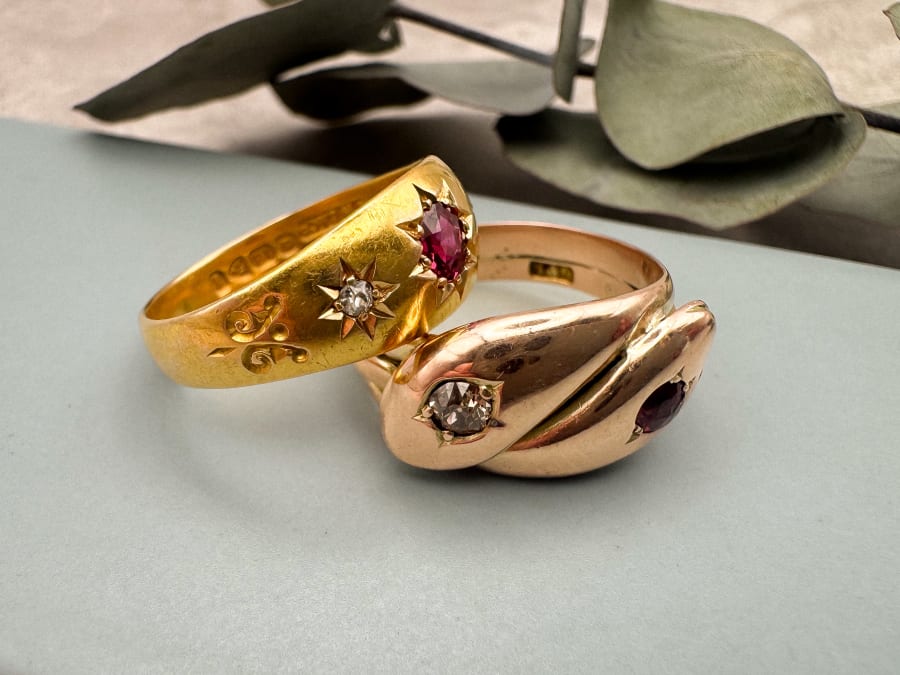
- 18ct Gold: 18 parts gold out of 24 (75% pure gold). Rich in colour with a classic, luxurious weight.
- 22ct Gold: 22 parts gold out of 24 (91.6% pure gold). Deep, buttery yellow and very soft.
Gold Purities Through the Ages
Gold legal standards changed over time, meaning specific carats act as timestamps for antique jewellery collectors.
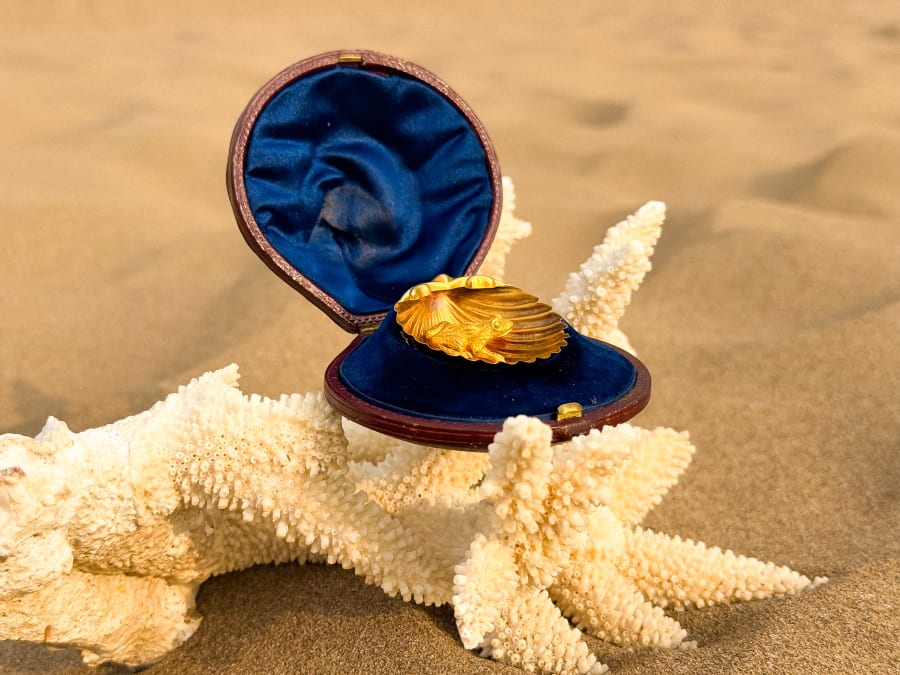
- Georgian Era (1714–1837): Georgian goldsmiths primarily worked in high-carat gold like 18ct and 22ct. High-carat metals were soft enough to hand-hammer into intricate repoussé patterns. Lower purity gold was not yet legally standardised for hallmarking during most of this period.
- Victorian Era (1837–1901): In 1854, Britain legalised lower gold standards (9ct, 12ct, and 15ct) to make jewellery more affordable to the growing middle class. 9ct and 15ct became hugely popular during the late Victorian era for durable brooches, curb chains, and target rings.
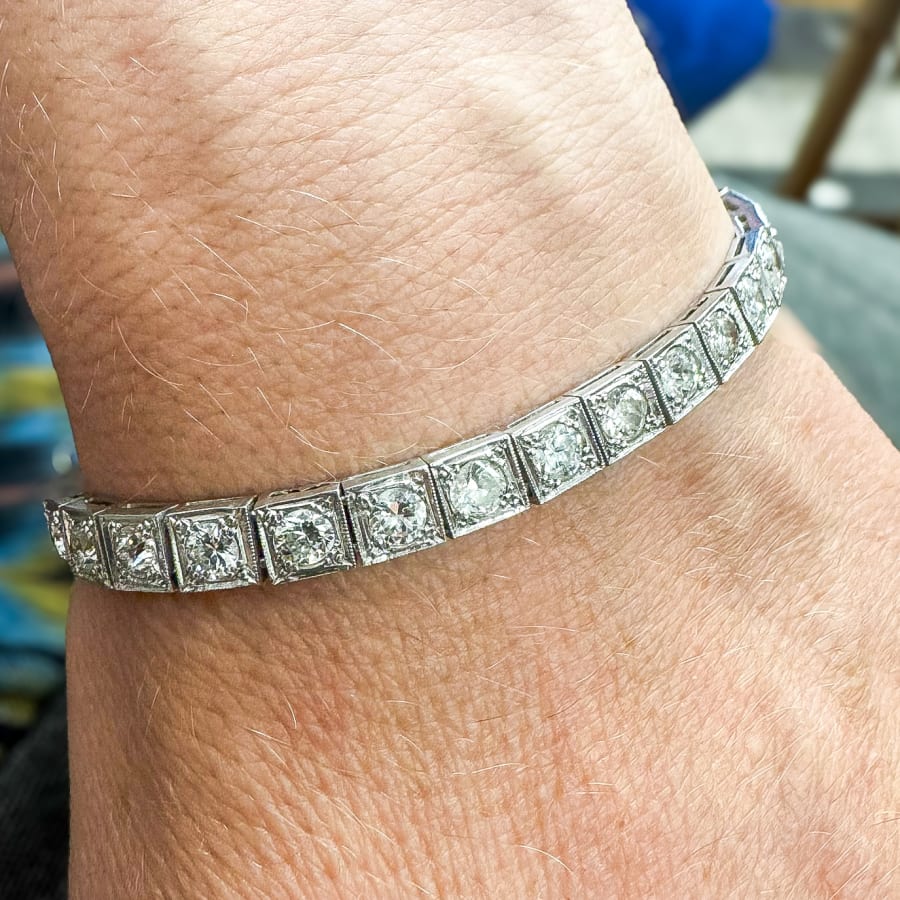
- Edwardian Era (1901–1910): 18ct gold paired with platinum fronts dominated the Edwardian era to showcase sparkling diamonds and fine garland motifs, while 15ct remained a staple for daily wear pieces.
- Art Deco & Mid-Century (1920s–1950s): In 1932, Britain discontinued 12ct and 15ct gold standards, replacing them with 14ct gold. As a result, 15ct gold instantly became a marker of true pre-1932 antique origin.
Choosing the Right Gold Purity for You
When collecting antique jewellery, choosing a carat comes down to balancing historic character, colour preference, and daily lifestyle.
- For Everyday Durability: 9ct gold contains more alloy metals, making it tough and resistant to bending. It is ideal for daily rings and everyday stacking chains.
- For Historic Uniqueness: 15ct gold offers a gorgeous warm warmth and a tangible link to British history, as it was only produced for 78 years between 1854 and 1932.
- For Rich Colour & Depth: 18ct and 22ct gold feature a gorgeous, deep yellow tone that never fades or tarnishes. While softer than 9ct, high-carat antique pieces have stood the test of time for centuries.
At The Jaybird Collection, we celebrate gold in all its historical purities, helping you find pieces that fit both your personal style and your lifestyle.
Keep reading